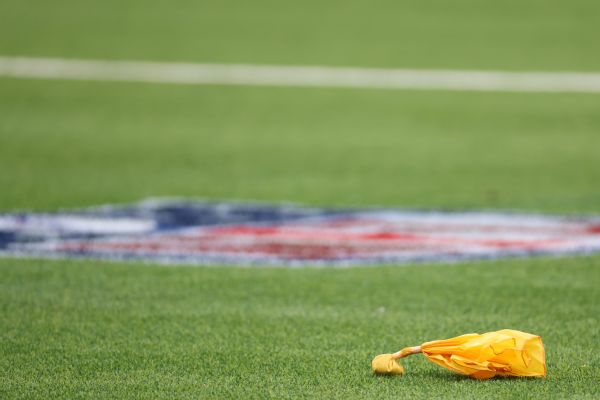
NFL competition committee considers allowing replay officials to penalize non-football acts
The NFL is exploring significant changes to its officiating rules, particularly regarding the role of replay officials in penalizing non-football acts during games.
Why it matters: As player safety continues to be a focal point for the league, this potential rule change could reshape how penalties are enforced and improve accountability on the field.
- With incidents like the unpenalized punch thrown by Seattle Seahawks cornerback Josh Jobe at Stefon Diggs during Super Bowl LX, the league aims to address acts that fall outside traditional football conduct, thereby enhancing player protection.
- The Competition Committee's discussions reflect a growing urgency to adapt officiating standards to maintain integrity and fairness within the game.
What’s new: Troy Vincent, the NFL's executive vice president of football operations, has indicated that there may be adjustments to the language that defines what constitutes a non-football act.
- This could pave the way for replay officials to throw flags for actions that previously escaped scrutiny, maintaining the game's competitive nature while safeguarding players.
- Vincent stated, "You don't want to just be expanding the Pandora's box... but we believe that things like the non-football act, you can really, really restrict what that is."
What to watch: The response from NFL owners and coaches will be crucial as they weigh the implications of empowering replay officials with additional authority.
- Historically, there has been hesitance to shift decision-making power away from on-field officials due to concerns about undermining their judgment.
- Enhancements in officiating could lead to more consistent enforcement of penalties, which would be welcomed by players and fans alike.
Between the lines: Recent examples illustrate the need for clarity in officiating.
- In addition to Jobe's actions against Diggs, Derick Hall of the Seahawks faced a one-game suspension for stepping on Rams guard Kevin Dotson—an incident that raised questions about the efficacy of current penalty guidelines.
- These cases underscore the potential consequences of allowing replay officials to engage more directly in the disciplinary process.
By the numbers: Injury rates related to kickoffs have seen improvements, partly due to recent rule changes. Jeff Miller, NFL executive vice president overseeing health and safety, noted that ACL tears league-wide are at their lowest percentage in seven years.
- Changes to kickoff protocols and the implementation of an ACL Prevention Program involving ten teams are credited with these positive trends, indicating that rule modifications can have tangible benefits.
Yes, but: Despite the positive developments, the league still faces challenges, such as the failure to propose changes to the controversial "tush push" play before the proposal deadline.
- While safety remains a priority, not every proposed alteration garners consensus among team executives, highlighting the complexity of navigating evolving gameplay dynamics.
The bottom line: As the NFL continues to address player safety and officiating consistency, the outcome of these discussions will likely influence both the legal framework of the game and the players’ experiences on the field moving forward.