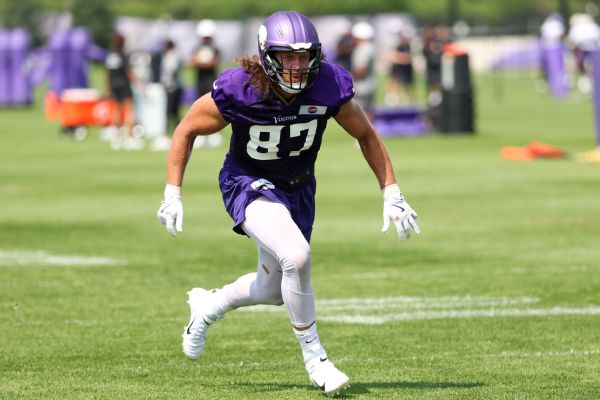
Vikings restructure Hockenson's contract, saving over $5 million in cap space
The Minnesota Vikings are restructuring contracts to alleviate a hefty salary cap deficit, with significant implications for both current roster stability and future team strategy.
Why it matters: The Vikings were facing a daunting $43 million overage against the NFL’s $301.2 million salary cap before recent adjustments.
This financial maneuvering is critical as teams navigate the complex landscape of player contracts while attempting to remain competitive in a rapidly evolving league.
What’s new: Tight end T.J. Hockenson has agreed to an adjusted contract that saves the Vikings over $5 million against the cap.
- Hockenson had the highest cap number for an NFL tight end at $21.3 million this season after signing a four-year, $66 million extension in August 2023.
- His performance has suffered since recovering from a knee injury, with only 92 receptions for 893 yards and three touchdowns across the 2024 and 2025 seasons.
By the numbers: The restructuring of Hockenson's deal is just part of broader efforts to manage the financial landscape effectively.
- Other players, such as receivers Justin Jefferson and cornerback Byron Murphy Jr., as well as left tackle Christian Darrisaw, have also seen their contracts restructured.
- This collective effort underscores a strategic pivot in the organization's approach to maintaining talent while adhering to salary cap constraints.
Yes, but: While these restructurings provide immediate relief, they may indicate deeper issues within the franchise regarding long-term sustainability.
- The decision to inform players like running back Aaron Jones Sr. and defensive tackles Javon Hargrave and Jonathan Allen of potential trades or releases suggests a prioritization of financial flexibility over established talent.
What to watch: The upcoming period will be crucial for the Vikings as they refine their roster and further clarify their intentions for remaining key players.
- The team's decisions could significantly influence their competitive standing in the NFC North, especially as other franchises make similar moves to bolster their own positions.
The bottom line: The Vikings’ proactive contract adjustments reflect a necessary response to fiscal pressures but may also signal a shift in team dynamics as they balance the desire for immediate competitiveness with the need for long-term financial health.
- As the landscape of player contracts continues to evolve, how Minnesota manages its assets will be pivotal in determining its success moving forward.